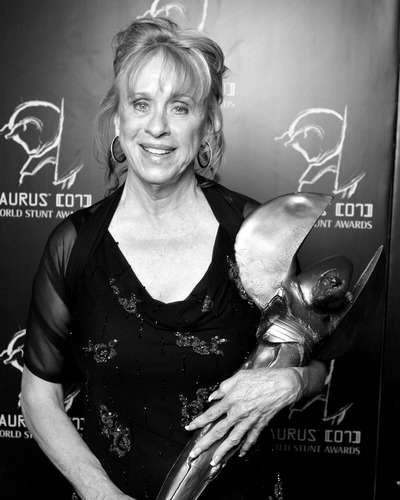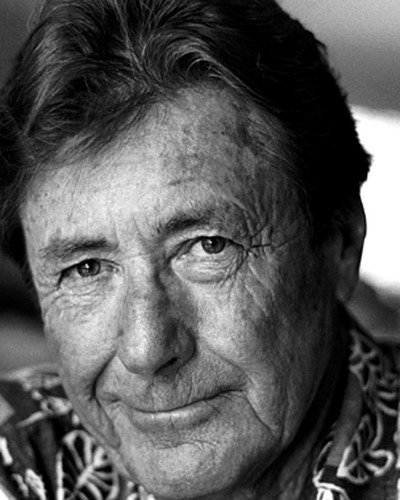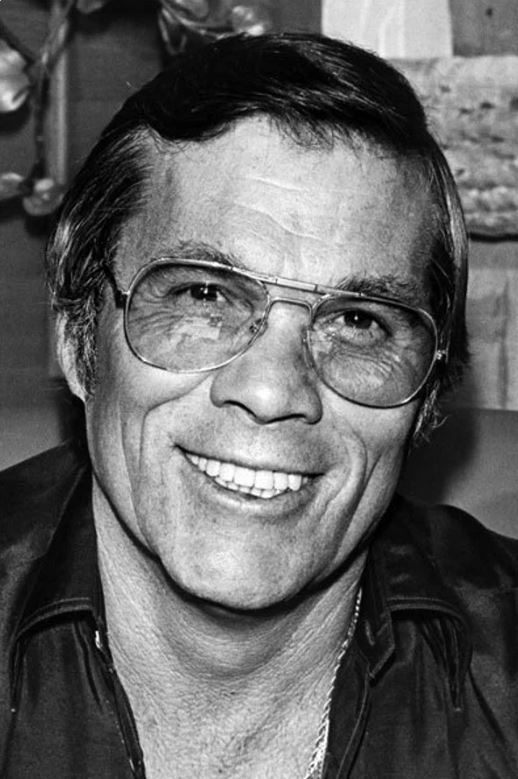
From balancing motorcycles as a child to redefining Hollywood stunt work, Debbie Evans has built a career spanning more than four decades as a true pioneer of motorsports and motion-picture stunt performance, and one of the most accomplished stuntwomen in Hollywood history.
Debbie began riding motorcycles at just six years old, competing at age nine and quickly rising through the ranks of observed trials. In 1976, she became the first woman in the U.S. to reach Expert status, regularly outperforming male competitors and earning recognition as the nation’s top female trials rider. Yamaha soon took notice, backing her as a factory-sponsored rider and showcasing her talents in stadiums and international exhibitions at age 14, where her signature headstand atop a balancing motorcycle became legendary.
Her leap into film came literally and figuratively, when she was asked to jump a motorcycle over a 30-foot ravine for Deathsport. That moment launched one of the most influential stunt careers in Hollywood history. In 1978, Debbie stunned the industry by tying for second overall in the CBS Stunt Competition while winning the car race outright as the only woman in the field. It was a turning point not just for her career, but for women in stunt work everywhere.
Over the next several decades, Debbie performed stunts in more than 400 films and television projects, becoming one of the most renowned car and motorcycle stunt performers in history, while also excelling as an all-around stunt performer. She is a seven-time Taurus World Stunt Award winner, recognized for iconic work including doubling Michelle Rodriguez throughout The Fast and the Furious franchise and delivering unforgettable action in The Matrix Reloaded. Her resume includes stunt driving and action work for some of Hollywood’s most prominent actresses including Angelina Jolie, Linda Hamilton, and Carrie-Anne Moss (and many more).
Debbie served the stunt community as a National and Los Angeles Local Board Member of SAG-AFTRA and contributed for many years to the Stunt Safety Committee, while also mentoring and encouraging the next generation of stunt performers, helping to advance professional standards and safety.
Her impact on motorsports and stunt performance has been recognized with induction into the AMA Motorcycle Hall of Fame, the Hollywood Stuntmen’s Hall of Fame, and the Trailblazers Hall of Fame, among other lifetime achievement honors. She also shared nearly five decades of life and work with her husband, Lane Leavitt, a pioneering stunt innovator whose equipment designs helped shape the modern stunt industry, together forming a rare and influential personal and professional partnership.
A champion, innovator, and mentor, Debbie Evans proved, long before it was expected, that women could excel at the highest levels of both sport and cinema. Her lifetime of accomplishments continues to inspire riders, performers, and filmmakers around the world.
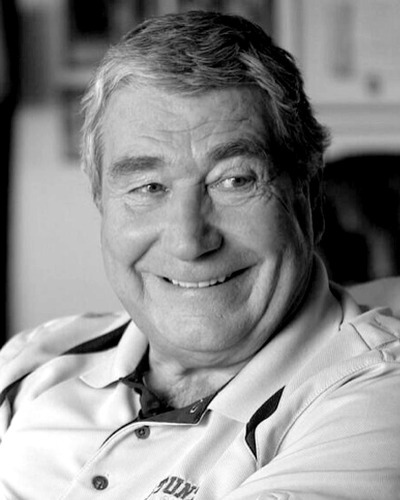
With more than six decades in the motion picture and television industries, Henry Kingi Sr. stands as one of the most iconic and influential stunt professionals of all time. His name is synonymous with precision, longevity, and trailblazing achievement. Nearly every modern stunt performer—whether behind the wheel, behind the camera, or performing high-intensity physical work—has been shaped by his skill, mentorship, or example.
Henry’s path began in the late 1940s, influenced by extraordinary figures in his early life. His mother’s close friend, film legend Dorothy Dandridge, once promised to put him in the movies, planting the seed for his future. His discipline and unwavering work ethic were further molded by his stepfather, Captain Laurence D. Wilkins, a decorated Tuskegee Airman of the 332nd “Red Tails.” In 1964, Henry entered the industry as a background performer and trained tirelessly after hours to master the stunt craft. When discrimination and closed doors made the path nearly impossible for Black stuntmen, he refused to accept the status quo.
In 1967, Henry became the Founding Vice President of the Black Stuntmen’s Association, taking a leadership role in confronting Hollywood’s discriminatory hiring practices. Working alongside the NAACP and EEOC, he helped secure 32 successful legal actions, culminating in the landmark 1976 federal consent decree mandating fair and equitable hiring in the major studios. His courage and persistence reshaped the stunt profession and opened the door for generations of performers to come.
As he fought for inclusion, Henry’s own stunt career soared. By the 1970s and 1980s, he had become one of Hollywood’s most versatile and respected performers, known for spectacular vehicle work, breathtaking physical stunts, and impeccable timing. From The Dukes of Hazzard to blockbuster collaborations with directors like Michael Bay, Henry delivered extraordinary performances well into his 70s and 80s—executing high-stakes jumps, crashes, and precision driving that made him a trusted go-to for some of cinema’s most demanding sequences. His acting roles further showcased his range, while his kindness and generosity—sharing snacks, supporting colleagues, or helping strangers on his day off—became as legendary as his skill.
On July 3, 2022, Henry’s contributions reached national recognition when the United States Senate honored him, flying a flag above the U.S. Capitol in acknowledgement of his decades of leadership, service, and courage.
This extraordinary blend of historic civil-rights advocacy, unmatched stunt mastery, steadfast generosity, and a career defined by excellence is why Henry Kingi was awarded the 2025 Taurus World Stunt Awards Lifetime Achievement Award. His legacy lives not only in the thousands of stunts he performed, but in the opportunities he created, the barriers he shattered, and the industry he helped transform for the better.
With 45+ years of experience in the motion picture and television industries, Rick Seaman is more than a familiar name. Entertainment insiders will tell you that over 75% of the celebrities and stunt men/ women who have had any experience with driving a vehicle in front of or behind the camera, have learned the necessary skills from Rick Seaman.
His driving career started in the early 1960s, when Rick left his eastern Pennsylvania hometown and headed to Tampa, Florida. While there he decided to join the Chitwood Car Stunt Show, a traveling car show that toured the country and featured jumps and flips and other daredevil feats performed with a vehicle. He spent the next 6 years touring with the show where he learned and perfected his many “tricks of the trade”. In 1968 his trajectory shifted when he was drafted into the U.S. Army infantry and spent the next two years serving in the Vietnam War. He was wounded while serving in Vietnam and received the Purple Heart. Despite the hardships Rick’s resilience shone through, foreshadowing the courage that would define his future.
Upon his return to the U.S. Rick jumped back into the stunt industry and by the 1990s, he had amassed an impressive resume working on over 500 features, TV shows and commercials. He performed 200 major car crashes, rollovers and jumps as well as over 400 chase scenes. After his military career ended and his film career took off, he continued to support his military brethren through his work with the National Veterans Foundation.
In 1997, Rick Seaman’s driving school, the Motion Picture Driving Clinic, emerged as a beacon of excellence in the field. With Rick at the helm, the school became a destination for both aspiring and seasoned stunt performers. Over the years, more than 2,100 individuals, including actors and stunt enthusiasts, have honed their skills under Rick’s guidance. His commitment to safety and precision has shaped countless careers and elevated the standards of stunt driving in the entertainment industry.
Rick’s driving influence can be felt in a roster of films that bear his mark, from classics like “Smokey and the Bandit Part 3”, “Airplane”, “Live and Let Die” to modern blockbusters such as “Charlie’s Angels”, “Lethal Weapon 4”, “Weekend at Bernie’s”, and “The Other Guys”. In 1996 he was credited as a screenwriter for his action film, “Chain Reaction” starring Keanu Reeves among others. As we celebrate Rick Seaman with the 2024 Taurus World Stunt Awards Lifetime Achievement Award, we also celebrate the enduring impact of his remarkable career on the world of cinema and beyond.
Conrad Earl “Connie” Palmisano was a distinguished American stuntman, second-unit director, and union leader whose career spanned over five decades in Hollywood. Born in Santa Rosa, California, Palmisano enlisted in the U.S. Marine Corps at 17 and served two tours in Vietnam from 1967 to 1969. After returning to civilian life, he began his film career in 1970 as a stuntman on the TV series The Young Rebels. He quickly established himself in the industry, contributing to films such as Rambo: First Blood (1982), Robocop 2 (1990), Batman Forever (1995), and Rush Hour 2 (2001).
Palmisano’s expertise extended beyond performance; he became a sought-after second-unit director, overseeing action sequences in numerous productions. He was also a dedicated union leader, serving as president of the Stuntmen’s Association of Motion Pictures for four terms and as a member of the Screen Actors Guild National Board. Notably, he was among the first stunt coordinators invited into the Academy of Motion Picture Arts and Sciences and played a pivotal role in forming the National Stunt and Safety Committee, which he chaired for several years
He is widely known for helping up and coming Stunt Performers advance their careers and progress to Coordinating and Directing. In addition in 2011 The Diamonds Raw Awards honored Conrad with a “Humanitarian Award” for his years of promoting specifically women and minorities in the Film Industry.
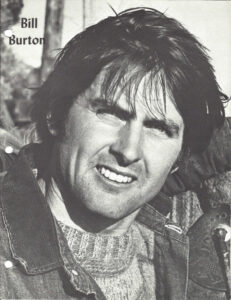
Billy Burton’s career began in 1966 at Universal Studios, where he leveraged his rodeo background into stunt work and photo doubling on numerous Western films and television series. He later moved to Fox Studios, where he worked closely with legendary stuntman Hal Needham on seventeen productions, including Undefeated.
In 1968, Burton joined the Stuntmen’s Association, working alongside industry icons such as Bill Catching, Al Wyatt, and Paul Baxley. He went on to co-found Stunt Unlimited with Hal Needham, Rondel, and Wilder, becoming part of a group that would significantly influence modern stunt coordination and performance. Over the course of his career, Burton earned two Taurus World Stunt Awards for Mission: Impossible II and won the World Stuntmen’s Competition twice.
Billy Burton built an extensive résumé as both a stunt performer and a stunt coordinator/second unit director, contributing to a wide range of major studio productions. As a stunt coordinator, his credits include large-scale action films such as Volcano, The Scorpion King, and Collateral Damage, where he oversaw and executed complex, high-risk action sequences.
As a stuntman, Burton performed on iconic films including Predator, Hard Target, and Hostage, frequently doubling for leading actors. Throughout his career, he worked closely with some of Hollywood’s most legendary stars, including John Wayne, Frank Sinatra, Kirk Douglas, Arnold Schwarzenegger, Jean-Claude Van Damme, Bruce Willis, and many others.
Billy Burton’s body of work reflects decades of excellence, versatility, and leadership in the stunt community. His contributions as both a performer and coordinator have left a lasting mark on action filmmaking and continue to be recognized within the industry.
Charlie Picerni was born in Corona Queens, New York. The fourth of five children to Italian Parents. After high school, he worked different jobs, one being construction work on high rise buildings in Manhattan. After deciding he didn’t want to work in construction anymore, Charlie headed west to try his luck in the movie business.
His brother Paul was an actor on the hit TV show “The Untouchables”. Charlie worked as a stand-in, an extra, and started doing stunt double work. Charlie immediately fell in love with this work and moved his family to California. Charlie excelled as a stuntman and then moved up to stunt coordinating TV shows. He got his big break on “Starsky and Hutch”, where he was the stunt coordinator and Paul Michael Glaser’s stunt double.
He started second unit directing “Starsky and Hutch” and then moved up to directing episodes of the show. He continued stunt coordinating and second unit directing such shows as “Kojak” and “Magnum PI”. He then started directing television for such shows as, “TJ Hooker”, “Matt Houston”, “Vegas”, “Hard Castle and McCormick”, “Hunter”, “Stingray”, “Finders of Lost Loves”, “A-Team”, “JJ Starbuck”, “Spencer for Hire”, “Blue Thunder”, “Gavilan” and HBO’s “Tales From the Crypt”.
At that time Charlie caught the eye of Warner Bros producer Joel Silver. Joel hired Charlie to stunt coordinate “Die Hard”. This lead to second unit directing and stunt coordinating on the films, “Die Hard 2”, “Road House”, “Lethal Weapon 2 & 3”, “Hudson Hawk”, “Christmas Vacation”, “The Last Boy Scout”, “Demolition Man”, “Ghost”, “Ricochet”, “Basic Instinct”, “Low Down Dirty Shame”, “True Romance”, “2 Days in the Valley”, “15 Minutes” and many more. During this time he also directed multiple episodes of the TV series “Seven Days”.
Charlie also worked as an actor in many TV and film projects throughout his career. Realizing he wanted to further his career as a director, he studied at the “Beverly Hills Playhouse” in the master class for two years with Milton Katsales. In 2007, he directed, produced and co-wrote a feature film entitled “Three Days to Vegas”, starring Peter Falk, Rip Torn and George Segal. In 2010 Charlie directed Ayn Rand’s “Night of January 16th” at the Odyssey Theatre to rave reviews. While continuing to work in all avenues of the motion picture business, he is currently developing and writing his own projects.
Gene LeBell, known as “The Toughest Man Alive”, boasts a remarkably diverse and lengthy career spanning over 65 years. His journey began as a student, practitioner, and instructor of martial arts, culminating in consecutive National Judo Championships wins in 1954 and 1955. This success launched him into the world of professional wrestling, where he not only wrestled but also managed the Los Angeles territory of the National Wrestling Alliance. He further distinguished himself as a broadcaster for 15 years, announcing wrestling matches on KTLA.
LeBell’s expertise extended beyond wrestling, encompassing various martial arts disciplines including Judo, Karate, Grappling, and No Holds Barred Fighting. He continued to officiate mixed martial arts matches and teach, and has authored multiple books on the subject. His contributions to the field were recognized with the prestigious Frank Gotch award in 2005. His skills naturally transitioned into a successful career as a stuntman, a role perfectly suited to his martial arts prowess, showmanship, and love of motorcycles.
His 50-year-plus stunt career brought him face-to-face with iconic characters like Superman, Batman, and the Incredible Hulk. He appeared in numerous television series, including The Beverly Hillbillies, Starsky and Hutch, and The Green Hornet, and even in their later film reboots. Remarkably, despite numerous falls and injuries, he embodied a resilient spirit, best summed up by his signature question: “What can I do for you?”
Born in 1953 in Buckinghamshire, England, Andy competed in many forms of two- and four-wheeled motorsport before entering the movie business. He began his film career in 1972 in England and France as a vehicle stunt performer. Originally, Andy mostly concentrated on vehicle stunts. In 1973, Andy decided to make use of his organizational skills as well and became an assistant director.
This proved extremely successful, and Andy enjoyed a meteoric rise through the ranks, eventually becoming one of the youngest and highest-paid First ADs in the world. This work took him all over the globe. He specialized particularly in very large international productions that involved complex, dangerous, and logistically difficult stunts and action sequences, including three of the largest James Bond films: The Man with the Golden Gun, The Spy Who Loved Me, and Moonraker. From 1973 to 1987, Andy worked as an Assistant Director on more than 70 international movies. As First Assistant Director, Andy’s credits include, among many others, several Oscar-nominated films, including Best Picture nominees Hope and Glory and The Dresser.
With these major credits under his belt, Andy once again decided in 1987 to concentrate on action—this time creating and directing entire action sequences. This move led Andy to design, coordinate, and/or direct some of the largest action sequences ever achieved on many international productions. One of Andy’s early big breaks occurred while he was still only 28 years old, when he was asked to take over directing the second unit of the hugely successful international hit movie Highlander, now considered a cult classic. The success of this film and the attention Andy’s action sequences received helped establish him as a successful Second Unit and Action Unit Director, firmly forging his career.
In 1989, Andy moved permanently from England to establish his base in California. Andy’s work is typified by the huge (1,200-person) Teamster battle in Hoffa; the (1,400-person) charge and battles in Stargate; the action on Galaxy Quest; the World War I battle scenes for Oscar-winner Frank Pierson’s TV movie Truman; the massive battles in Tim Burton’s Planet of the Apes; action sequences in Scooby-Doo 2, Catwoman, I, Robot, and Eragon; the now-iconic music videos Metallica’s I Disappear and Sheryl Crow’s Steve McQueen; as well as many television series episodes for Jerry Bruckheimer Television and Warner Bros. Television.
Andy’s work has taken him from tropical rainforests to the Arctic Circle, through deserts in over forty countries across six continents around the world.
Andy has successfully written, directed, and produced films and television projects and has lectured on the art of action moviemaking at colleges and film schools. His hobbies still include driving racecars and riding motorcycles. He is part of a living dynasty of a stunt family, the Armstrongs, a family responsible for as many action moments on film as any family on Earth.
Recently, Andy and his brother Vic have worked together more frequently as a team. Along with Andy’s son James; Vic’s son Scott; Vic’s wife Wendy; and Vic’s daughter Georgina, the family worked together to design, direct, coordinate, and perform the action on Sony’s The Green Hornet, creating action sequences as large and complex as any ever made, employing over 170 Hollywood stuntmen and stuntwomen. During the making of The Green Hornet, James, Scott, and Andy himself each performed large, innovative, and spectacular vehicle stunts together in the same car chase.
The family again teamed up to bring Marvel’s epic Norse warrior Thor, starring Chris Hemsworth, Natalie Portman, and Anthony Hopkins, to the big screen. This was immediately followed by a commission to design, choreograph, and shoot large additional battle sequences for the Nicolas Cage medieval epic Season of the Witch. The Armstrong Action family then reunited once more to entirely reinvent the style of action for The Amazing Spider-Man and its sequel The Amazing Spider-Man 2 for Sony Pictures.
Andy is currently designing the action for the large-scale traveling live arena show Marvel Universe Live, which began touring in June 2014. He also coordinated and directed the action on India’s biggest foreign box office hit, Bang Bang, during 2014.
Gary Combs began his career as a stuntman in 1961 on the television series Wagon Train, doubling for Robert Horton. He spent his early years at Universal Studios, working extensively on classic westerns including The Virginian, Laredo, and numerous other productions that defined the era. His first feature film was Shenandoah, marking the start of what would become a nearly five-decade career in film and television.
Gary earned his first stunt coordinating credit on the Paramount television series Longstreet and went on to coordinate and direct second units on countless productions. He was one of the original eleven members to found Stunt Unlimited, alongside his mentor and close friend Hal Needham—an achievement that helped shape modern stunt coordination and performance.
Over the course of his career, Gary worked as a stuntman, stunt coordinator, and second unit director until his retirement in 2009 following the television series Samantha Who. His extensive body of work includes six films directed by Sam Peckinpah—The Wild Bunch, The Getaway, Pat Garrett & Billy the Kid, Bring Me the Head of Alfredo Garcia, Killer Elite, and Convoy—as well as four John Wayne films: True Grit, Rooster Cogburn, Hellfighters, and El Dorado.
Gary also collaborated on three Paul Verhoeven films (RoboCop, Showgirls, Hollow Man), four Gary Marshall films (Dear God, Runaway Bride, The Princess Diaries—in which he memorably portrayed the “very drunk” Lord Fricker—and Raising Helen), two Mel Brooks films (History of the World, Part I and Dracula: Dead and Loving It), two Buzz Kulick films (The Hunter and Pursuit of D.B. Cooper), and four Hal Needham films, including Hooper and Smokey and the Bandit.
Among his personal favorites are Blade Runner, The Horse Whisperer, Legends of the Fall, and K-9. He also worked on three films with Steve McQueen, including Tom Horn, The Getaway, and The Hunter.
In television, Gary spent five years in Canada with Cannell Productions as stunt coordinator and second unit director on 21 Jump Street, Wiseguy, Unsub, Booker, and The Commish, followed by four years in Los Angeles on Hardcastle & McCormick and Hunter in the same roles.
Across nearly 50 years in the industry, Gary Combs built a reputation as a master problem-solver, creative leader, mentor, and trusted collaborator. His contributions have left a lasting impact on the stunt community and the art of filmmaking itself.
David R. Ellis was an American film director, second unit director, and stunt performer renowned for his dynamic contributions to Hollywood action cinema. Born in Santa Monica, California, Ellis was a top-ranked junior pro surfer before transitioning into acting and then stunt work at age 19.
His first stunt credit was for Bob Crane’s Superdad (1973), and he quickly became a sought-after professional, amassing over 75 stunt credits in films like Scarface, Patriot Games, and Lethal Weapon .Ellis advanced to second unit directing in the 1980s, working on major blockbusters such as Waterworld, Harry Potter and the Sorcerer’s Stone, and The Matrix Reloaded . His directorial debut came with Disney’s Homeward Bound II: Lost in San Francisco (1996), which grossed over $100 million. He later helmed cult-favorite thrillers like Snakes on a Plane (2006), Final Destination 2 (2003), and Shark Night 3D (2011), known for their high-octane action and inventive set pieces
Ellis was a member and served as vice president of Stunts Unlimited, an elite stunt performance organization based in Sherman Oaks, California. He died unexpectedly on January 7, 2013, in Johannesburg, South Africa, while preparing a live-action remake of the anime Kite. His legacy endures through his impactful work in action filmmaking and his influence on modern stunt choreography.
Glenn R. Wilder, a Taurus Lifetime Achievement Award winner, dedicated his life to the world of stunt work. His career, spanning several decades, is marked not only by his impressive achievements in designing, coordinating, and performing stunts in countless films and television shows, but also by his unwavering commitment to safety, innovation, and mentorship. He played an instrumental role in implementing safety standards and improving equipment within the industry. His travels around the globe coordinating and performing stunts allowed him to collaborate with some of the most renowned actors and directors.
Wilder’s passion extends beyond personal accomplishment. He started training others early in his career, mentoring aspiring stunt professionals, and actively seeking to help those who followed. He is recognized for his pioneering efforts in training women and minorities, significantly contributing to diversity and inclusion within the stunt industry. Even after relocating to Florida, he continued his dedication by conducting regular stunt training seminars.
He viewed the ultimate compliment as the sentiment that every set should benefit from his expertise. Wilder’s legacy is not just one of extraordinary stunts, but of enduring mentorship and a lasting positive influence on the stunt community.
Loren Janes’s career spanned over five decades, establishing him as a prolific and highly respected figure in the film and television industry. His journey began in 1954 with a dramatic eighty-foot cliff dive in an Esther Williams movie, marking the start of his professional career as a stuntman and coordinator. Over the years, he worked alongside some of Hollywood’s biggest names, including doubling for Steve McQueen for his entire 23-year career. His filmography boasts appearances in over 500 movies and 2,200 television shows.
Beyond his stunt work, Janes was a key figure in the organization and safety of the stunt industry. He co-founded the Stuntmen’s Association of Motion Pictures and Television in 1961, was elected to the Screen Actors Guild’s Board of Directors in 1992, and served as National Chair of the SAG Stunt and Safety Committee. This dedication to safety and professionalism is a testament to his character. His achievements were recognized with numerous awards, including the coveted Golden Boot Award (the “Oscar” for Westerns) in 2001, the “Gallery of Honor” award from the World Acrobatic Society in 2003, and the “Silver Spur Award” for outstanding achievement in entertainment and Western films in 2003. He was inducted into the “Walk of Western Stars” in 2004.
Janes’s adventurous spirit extended beyond his professional life. From a young age, he embarked on solo hikes and wilderness expeditions, showcasing a remarkable resilience and self-reliance. His athletic pursuits were equally impressive, competing in multiple sports and even entering the U.S. Olympic trials in the modern pentathlon. His diverse talents also included skills in biology, ecology, music, teaching, photography, and lecturing. Remarkably, throughout his extensive career, he sustained no serious injuries, attributing this to discipline, fitness, and faith. His extensive list of film and television credits further underscores his remarkable contributions to the entertainment world.
Born in Grambling, Louisiana, Jophery C. Brown’s athletic prowess led him to a successful baseball career, culminating in an All-American selection in 1966. However, a rotator cuff injury shifted his trajectory towards the thrilling world of stunts, beginning in 1972 as an extra and progressing to become a highly respected stunt coordinator.
Brown’s career in Hollywood is defined by a unique combination of fearless stunt work and strategic precision. He is perhaps most famously known for doubling for Sandra Bullock in the blockbuster Speed. Brown also notably served as a stunt double for Morgan Freeman. Throughout his career, Brown contributed to a wide array of iconic films, including Scarface (where he was a stunt coordinator), Bad Boys II, Action Jackson, Die Hard, Lethal Weapon, The Fugitive, and The Blues Brothers. His work spans decades of action cinema, and he earned industry recognition with two nominations for Scarface and a Taurus World Stunt Award in 2004 for his work on Bad Boys II.
Beyond his individual accomplishments, Brown was deeply involved in advocating for the Black stunt community. He actively worked with the Black Stuntmen’s Association and the Coalition of Black Stuntmen and Women, highlighting his commitment to preserving their legacy and
Power, fostering future generations of stunt performers. His nomination for the Taurus World Stunt Lifetime Achievement Award underscores his lasting contributions to the industry and his profound impact on the lives of countless individuals.
Jeannie Epper’s life is a testament to the thrilling world of stunt work, a legacy she inherited from her family. From a childhood spent amongst siblings who embraced the adventurous nature of stunts, her path was set early. At the tender age of nine, she performed her first on-camera stunt, an undeniable call to action.
After a brief hiatus spent attending a Swiss boarding school, Jeannie returned to the United States and quickly established herself in the industry. Her work included doubling Lynda Carter in Wonder Woman and various roles in Steven Spielberg productions. The stunts grew increasingly daring, exemplified by her daring jump from a helicopter onto a moving train while doubling Polly Holliday in Stir Crazy. Her expertise expanded into stunt coordinating and safety techniques.
Jeannie’s dedication and skill earned her recognition, culminating in the 1985 Stuntman Awards’ Most Spectacular Stunt Sequence Award for Romancing the Stone, and the 1994 Crystal Award from Women in Film for outstanding work. Off-screen Jeannie continued to be a force to be reckoned with as she served as President of the Stuntwomen’s Association of Motion Pictures, Inc., was a founding member of both the Taurus World Stunt Awards Foundation and TWSA Blue Ribbon Committee and was featured in the 2004 documentary Double Dare about her life and career. Her work, in generations of films, will always be cherished and she will be forever celebrated as a true wonder woman.
Vic Armstrong is a world-renowned Action Director whose contributions to over 250 motion pictures during the past 36 years have earned him many of the most prestigious awards and honors from the worldwide motion picture industry. In 2001, Vic was honored by the Academy of Motion Picture Arts and Sciences with a Technical Achievement Award (Oscar). In 2002, he was awarded the prestigious Michael Balcon BAFTA, a Lifetime Achievement Award for Outstanding British Contribution to Cinema, as well as numerous World Stunt Awards, and inclusion in the Guinness Book of World Records. More recently, in 2003, Vic was honored by Michael Aspel on This Is Your Life.
Vic’s reputation for precision, his ability to execute extremely complex and dangerous stunts and action sequences safely, and his mastery of dynamic camera work have made him a highly sought-after and much-in-demand Action Unit Director. Recently, Vic contributed dozens of thrilling action scenes to some of the most successful and critically acclaimed motion pictures in the world. These include the last three James Bond features—Tomorrow Never Dies, The World Is Not Enough, and Die Another Day—the Martin Scorsese film Gangs of New York, and the international box office hit Charlie’s Angels.
Vic’s résumé reads like a “who’s who” of film history, including contributions to some of the most popular films of all time. Following his stunt debut as an accomplished horse rider, doubling for Gregory Peck in Stanley Donen’s Arabesque, Vic went on to work in countless commercials, television shows, and feature films in over 55 countries around the world. Demonstrating his creativity and daring, he remains the only person ever to have successfully jumped around the Grand National course at Aintree with a helmet-mounted film camera on his head—a throwback to his early teens as a steeplechase jockey.
Vic’s earliest work included stints on the legendary television series The Peter Cook & Dudley Moore Show, as well as the feature film Chitty Chitty Bang Bang, and many of the classic James Bond films, including You Only Live Twice, On Her Majesty’s Secret Service, and Live and Let Die.
His reputation for precision and attention to detail is reflected in his direction and production of some of the most complicated action sequences ever accomplished in cinematic history, beginning with the 1968 British film Figures in a Landscape for director Joseph Losey, and continuing with such epics as A Bridge Too Far, Young Winston, and the first two Superman films. Vic’s skills have enabled him to work closely with many major stars, including Sean Connery, Christopher Reeve, Donald Sutherland, Timothy Dalton, George C. Scott, Malcolm McDowell, Roger Moore, Richard Chamberlain, George Lazenby, Ryan O’Neal, Jon Voight, Pierce Brosnan, and Liam Neeson, among many others.
Vic’s resemblance to—and friendship with—Harrison Ford, established on the film Raiders of the Lost Ark, led to the opportunity to double for Ford and serve as Stunt Coordinator throughout the Indiana Jones trilogy. This made Vic (along with George Lucas) one of the very few creative contributors to work on all three Indiana Jones films, as well as all three seasons of The Young Indiana Jones Chronicles television series.
As an Action Unit Director, Vic’s creative vision has been sought by some of the world’s most respected and prominent filmmakers, including Steven Spielberg, Paul Verhoeven, David Lean, Peter Yates, Roland Joffé, Roman Polanski, Sir Richard Attenborough, Ridley Scott, Michael Cimino, George Lucas, and Martin Scorsese. His association with George Lucas led to Vic’s directorial debut on the premiere episode of the second season of The Young Indiana Jones Chronicles. Ironically, this episode reunited Vic with his longtime friend Christopher Lee, with whom he had previously worked on Hammer horror films.
Vic’s extensive body of work spans films of every genre and scale, including The Mission, Empire of the Sun, Black Beauty, Terminator 2: Judgment Day, An American Werewolf in London, Double Impact, Dune, Total Recall, Air America, Universal Soldier, Return of the Jedi, Blade Runner, Henry V, Rob Roy, Starship Troopers, Tomorrow Never Dies, Entrapment, The World Is Not Enough, Charlie’s Angels, Captain Corelli’s Mandolin, and Gangs of New York, to name just a few.
Vic is truly an international filmmaker, having worked on more than 250 motion pictures in over 50 countries during his nearly 40-year career. And that list continues to grow. During the rare times when he is not working, Vic divides his time between his farm in Berkshire, England, and his home in Los Angeles.
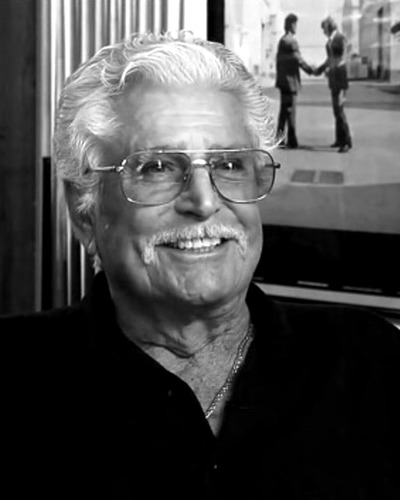
Ronnie Rondell was an American actor, stuntman, and stunt coordinator whose career spanned more than five decades and over 100 feature films. He was widely respected for his fearless work and technical mastery, with credits including How the West Was Won, Blazing Saddles, Lethal Weapon, The Crow, Thelma & Louise, Speed, and The Matrix Reloaded.
Born in Hollywood, California, Rondell grew up around film sets through his father, a silent-era actor and assistant director. After serving as a Navy diver, he began working as a film extra before transitioning into stunt work, eventually doubling for leading television actors and becoming known for high-risk aerial falls and fiery vehicle stunts. In 1970, he co-founded Stunts Unlimited with Hal Needham and Glenn Wilder, helping to elevate the craft of stunt performance and coordination.
Rondell gained a unique place in pop culture history as the burning businessman on the cover of Pink Floyd’s Wish You Were Here, a meticulously executed stunt that became one of the most iconic album images of all time. He later expanded into directing and second unit work, helming the action film No Safe Haven and contributing as second unit director on The Two Jakes, The Mighty Ducks, and Captain Ron. In 2003, he briefly came out of retirement to perform in a complex car chase sequence in The Matrix Reloaded, working alongside his son, stunt coordinator Ronald A. Rondell.
He is remembered as a pioneering figure whose skill, bravery, and leadership left an enduring mark on the film industry.
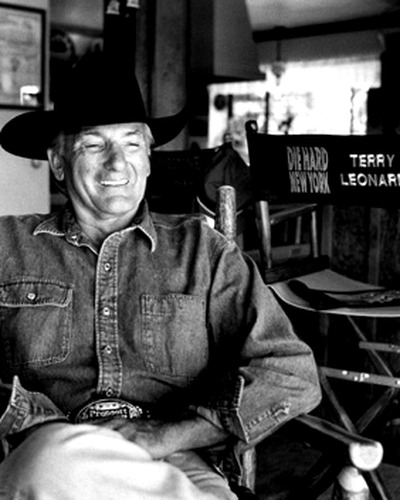
Terry Leonard is an award-winning stuntman, stunt coordinator, second unit director, actor, and precision driver whose Hollywood career spans more than 35 years and over 130 motion pictures and television productions. Regarded as a legend within the film industry, Leonard is known for his exceptional versatility, technical precision, and ability to deliver complex action sequences at the highest level.
Leonard’s work has attracted the respect and collaboration of many of Hollywood’s most accomplished filmmakers, including Steven Spielberg and Ron Howard. His extensive list of credits includes major studio productions such as Apocalypse Now, A Man Called Horse, Romancing the Stone, Patriot Games, Death Wish 2, John Carpenter’s Christine, Die Hard: With a Vengeance, Rush Hour, The Sum of All Fears, Joy Ride, The Fast and the Furious: Tokyo Drift, and Inception, among many others.
Before entering the film industry, Leonard attended the University of Arizona and was a decathlete during the 1964 Olympic Trials. He also played professional football for the British Columbia Lions in Vancouver, Canada, until a back injury ended his athletic career. Following that injury, Leonard reached out to veteran stuntman Chuck Roberson, which led him to Hollywood. He worked as an extra on McLintock! and performed his first major stunt on El Dorado, launching a long and distinguished career in stunts and action filmmaking.
In addition to his work as a stunt performer, Leonard became highly sought after as a stunt coordinator and second unit director, bringing leadership and creative vision to numerous productions, including 2 Fast 2 Furious. His contributions to the industry have earned him widespread recognition from his peers, including selection by the Taurus World Stunt Awards Blue Ribbon Committee and the receipt of the Golden Boot Award in 2003 for his significant contributions to the Western genre.
Terry Leonard’s career reflects a lifetime of excellence, adaptability, and passion for action filmmaking, and his influence continues to be felt across generations of stunt professionals.
Wayne “Buddy” Van Horn was a celebrated American stuntman, stunt coordinator, and director, best known for his long-standing collaboration with Clint Eastwood. Born in Los Angeles, California, Van Horn grew up near the Universal Studios lot where his father worked as a veterinarian. His early exposure to film sets and animals led him to work as a horse wrangler and extra in Westerns during the 1950s. After serving two years in the U.S. Army, he returned to Hollywood and began his career as a stuntman.
Buddy van Horn’s stunt work includes 1950’s classics such as Spartacus, Zorro, Around the World in Eighty Days and Prince Valiant. He has doubled stars such as Clint Eastwood, Jimmy Stewart, Henry Fonda and Guy Williams, among many others. Van Horn’s professional relationship as a stunt double and coordinator for Clint Eastwood has spanned an incredible four decades, having first worked together on the 1969 film Paint Your Wagon. The relationship continued through popular classics such as Dirty Harry, Magnum Force, Absolute Power, True Crime and Space Cowboys.
Van Horn was widely respected in the industry. He passed away in 2021 at the age of 92, leaving behind a legacy as one of Hollywood’s most enduring behind-the-scenes talents. He was selected to receive the prestigious TWSA Lifetime Achievement Award in recognition of his pioneering work that has helped blaze a trail for succeeding generations of stunt performers.
Cookie Policy
We use cookies to personalise site content, social media features and to analyse our traffic. We also share information about your use of this site with our advertising and social media partners. Privacy Policy.